

Beyond Ctrl+F: Memory in Brains and Machines
Gabriel Kreiman – Harvard University
gabriel.kreiman@tch.harvard.edu
gabriel.kreiman@childrens.harvard.edu
Abstract:
Memory does more than preserve the past: it shapes what we see, how we learn, and what comes to mind next. In this keynote, I will connect human single-neuron recordings with advances in AI to explore how experience becomes useful knowledge. I will show how rapid visual learning reshapes neuronal representations and perception, and how AI-guided image selection and enhancement accelerate human category learning. Turning to episodic memory, I will examine how neurons detect cognitive boundaries to organize experience into events, and how theta phase precession supports memory formation and retrieval. Together, these findings motivate a challenge for AI: moving beyond storage and search toward proactive, lifelong, associative memory. The overarching question is reciprocal: what can brains teach machines about remembering, and how can machines help brains learn?
 Bio:
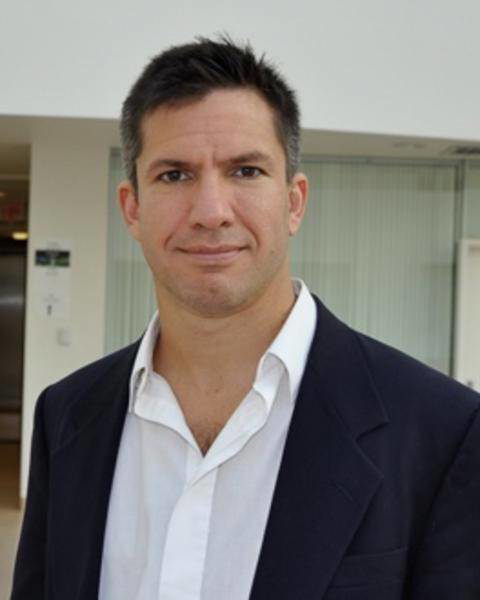
Gabriel Kreiman is a neuroscientist, artificial intelligence researcher, and technology entrepreneur whose work bridges biological intelligence and the development of next-generation AI systems. Formerly a Professor at Harvard Medical School, where he conducted research for two decades, he is currently the Co-founder and CEO of Engramme, an AI company pioneering technologies to augment human memory and cognitive capabilities.
With more than 160 scientific publications and three books, his research has advanced our understanding of visual recognition, learning, memory, and neural computation. His recent work explores visual relational reasoning, the convergence of human and artificial intelligence, and the mechanisms that enable intelligent systems to learn, generalize, and remember. His findings have appeared in leading scientific venues, including Nature Neuroscience, Nature Human Behaviour, and major international AI conferences.
At Engramme, he is translating insights from neuroscience into a new generation of AI memory systems designed to provide proactive, context-aware access to information. His career exemplifies the powerful intersection of fundamental scientific discovery, cutting-edge artificial intelligence, and transformative technological innovation.
Are We Ready for Snow-tonomous Driving? Toward Robust Automated Driving in Extreme Weather
Eren Aksoy – Lund University
eren.aksoy@cs.lth.se
Abstract:
Over the past decade, significant investments have been made globally into the development of autonomous vehicle technologies. Industry and academia have dedicated a significant amount of financial, scientific, and infrastructural resources to collect extensive data over millions of kilometers on public roads and to train advanced AI-based automated driving algorithms. However, not every kilometer driven is equal! Most automated driving systems have, to date, been primarily trained and tested in clear or moderately degraded conditions. This strong bias poses a critical challenge for ensuring robust performance in harsh weather scenarios such as dense fog, heavy rain, or snowfall, which severely impact sensor reliability and the performance of perception and control algorithms.
In this talk, I will introduce the EU-funded Horizon Europe Innovation Action project ROADVIEW, which aims to develop robust and cost-efficient perception and decision-making systems for automated driving in extreme weather conditions. After a brief overview of the project, I will share our latest data-driven weather-aware perception and control solutions evaluated under challenging weather conditions. I will also introduce our newly collected multimodal multitask dataset captured under active snowfall. Finally, I will conclude by presenting experimental findings revealing the limitations of current state-of-the-art approaches in semantic segmentation, object detection, and 3D point cloud filtering, particularly under snowy and adverse weather conditions, highlighting the critical gaps that must be addressed to achieve truly robust snow-tonomous driving systems.
 Bio:
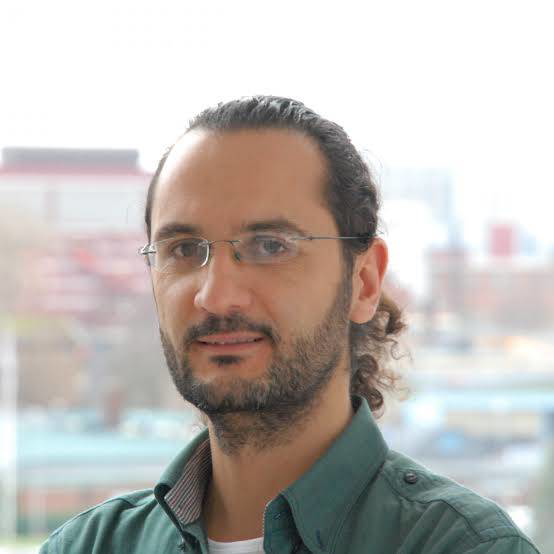
Eren Aksoy is an Associate Professor (Docent) at Lund University, Sweden. He coordinates the Horizon Europe project ROADVIEW, which focuses on robust automated driving in extreme weather. He obtained his Ph.D. in computer science from the University of Göttingen, Germany, in 2012. During his Ph.D. studies, he invented the concept of Semantic Event Chains to encode, learn, and execute human manipulation actions in the context of robot imitation learning. His framework has been employed as a technical robot perception-action interface in several EU projects such as IntellACT, Xperience, and ACAT.
Prior to relocating to Sweden, he spent three years as a postdoctoral research fellow in the H2T group led by Prof. Dr. Tamim Asfour at the Karlsruhe Institute of Technology. Recently, as a visiting scholar, he conducted research on AI-based perception algorithms for autonomous vehicles at Volvo GTT and Zenseact AB in Sweden. Dr. Aksoy holds editorial appointments as Editor and Associate Editor for top-tier robotics journals and conferences, including RA-L, the Robot Learning Journal, ICRA, IROS, Humanoids, and ITSC. His research interests include scene semantics, computer vision, AI, and cognitive robotics. He actively works on creating semantic representations of visual experiences to improve the environment and action understanding of autonomous systems, such as robots and unmanned vehicles.